
What is it? | Why does it matter? | Who is involved?
How does it work? | History & background | Rule | Where are we in the process?
Get involved
History & background
New Mexico’s transportation fuel landscape
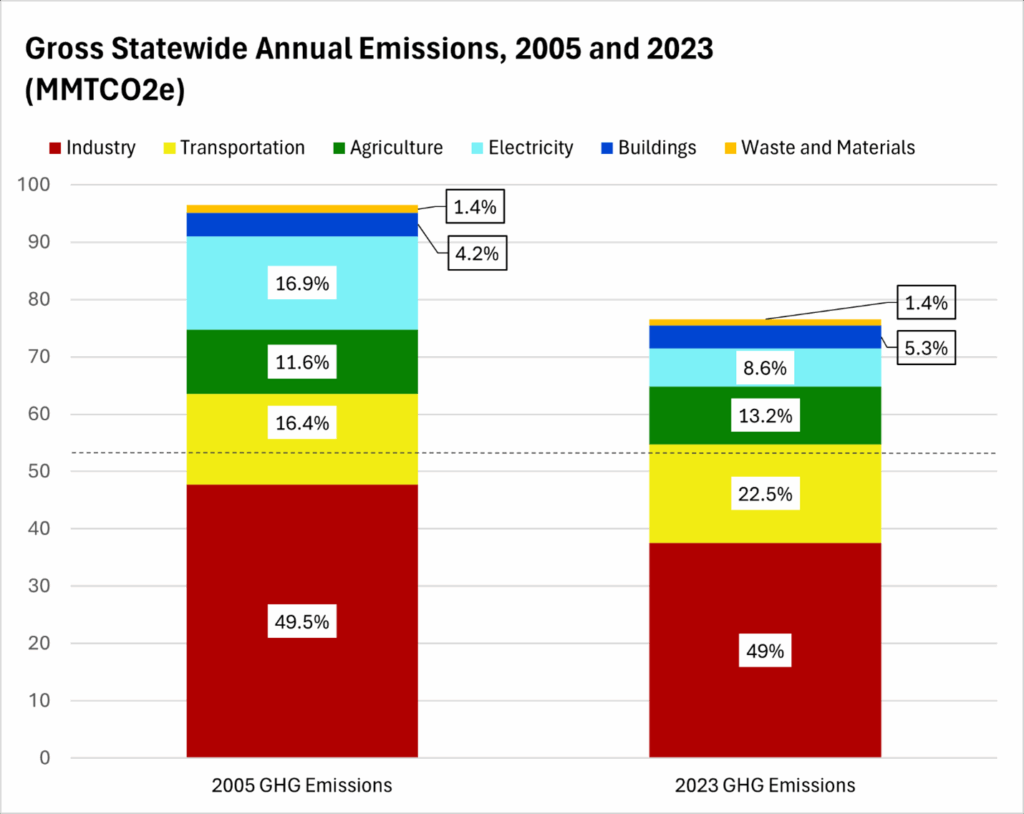
Transportation is the second largest source of climate pollution in New Mexico, accounting for nearly 23% of the state’s total emissions1, Transportation includes different types of travel, such as personal cars, delivery trucks, freight vehicles, trains, and airplanes.
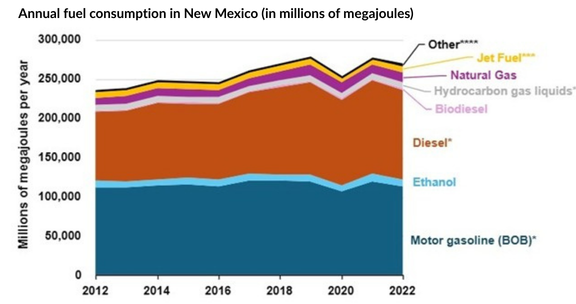
Most climate pollution from transportation is carbon dioxide emitted from burning fossil fuel, like gasoline and diesel, in vehicle engines. Within the transportation sector, fossil fuel represents the biggest portion of New Mexico’s energy consumption. Some fuel used in NM is already considered “clean” fuel, including ethanol, biodiesel, and natural gas.
New Mexico’s climate goals
The Clean Transportation Fuel Program plays a critical role in meeting the state’s climate goals for the transportation sector. To learn more, see New Mexico’s Climate Action Plan.
Other state programs
New Mexico is the fourth state in the U.S. to enact a low-carbon fuel program. Other states with similar programs include:
- California: Low Carbon Fuel Standard
- Oregon: Clean Fuels Program
- Washington: Clean Fuel Standard
Canada and British Columbia also have low-carbon fuel programs.