
What is it? | Why does it matter? | Who is involved?
How does it work? | History & background | Rule | Where are we in the process?
Get involved
Who is involved?
Energy industry
- Companies and organizations that import or produce:
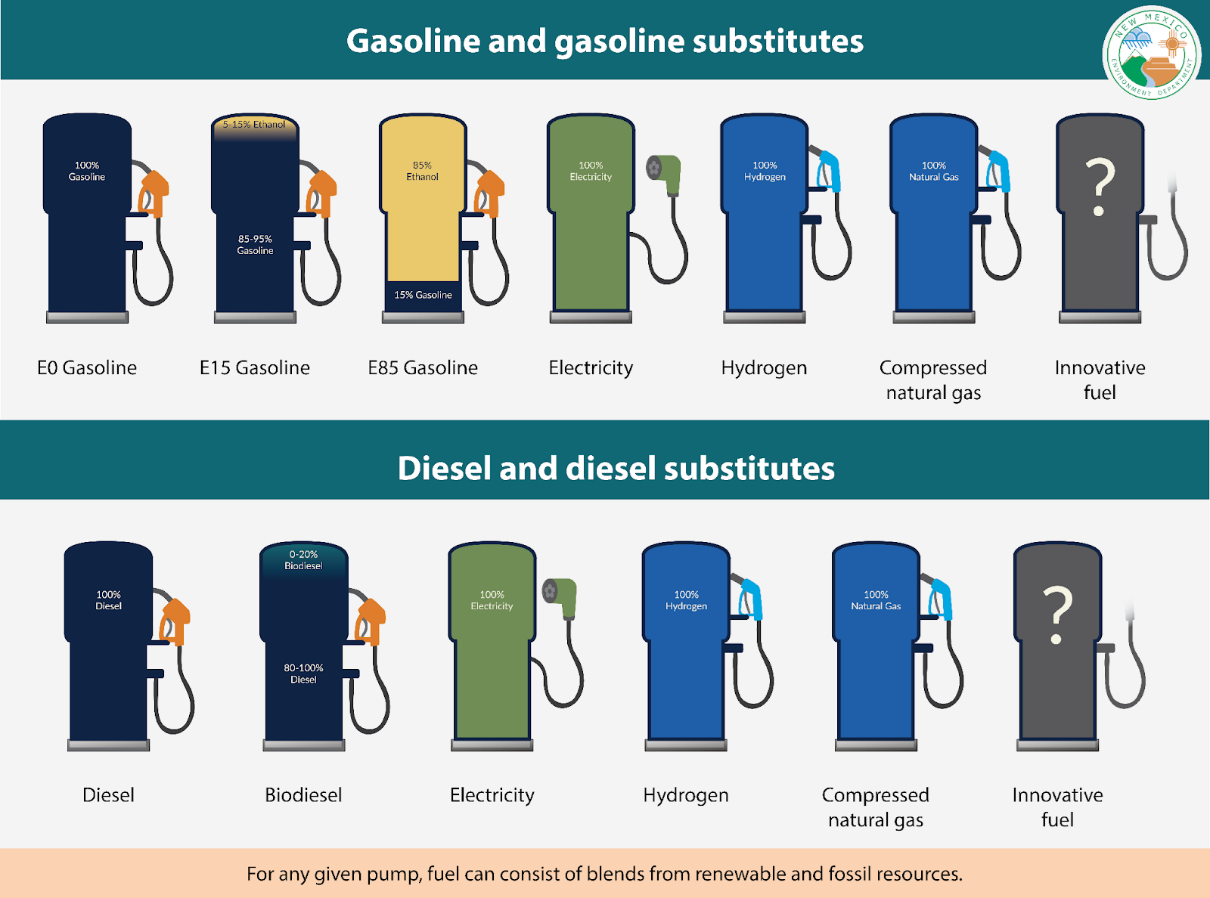
*Not an exhaustive list of fuel types. For a more complete list, see New Mexico’s Clean Transportation Fuel Standards.
- Entities that own or operate electric vehicle charging stations, electric vehicle fleets, hydrogen stations, propane fueling equipment in New Mexico
These organizations can generate credits or deficits depending on whether their carbon intensity falls above or below the standard.
- Organizations that report on behalf of credit or deficit generating fuel providers
Government
- Climate Change Bureau: Within the Environmental Protection Division of New Mexico Environment Department (NMED), the Climate Change Bureau (CCB) created the Clean Transportation Fuel Program rule. CCB will also implement the program and enforce it.
- CTFP Advisory Committee: Convened by the Environment Department Cabinet Secretary, the Committee members include interested parties and experts that provide input on the program’s performance, future program design, and potential rule changes.
- Environmental Improvement Board (EIB): A governor-appointed group of seven members who approved the Clean Transportation Fuel Program rule that the Climate Change Bureau created. More generally, the EIB is a group of individuals with environmental policy experience that hears, adopts, publishes, and amends most environmental quality rules in New Mexico.
Non-government
- Backstop aggregator: Selected by NMED, a backstop aggregator is a non-profit organization that collects, manages, and sells credits that would otherwise go unclaimed, ensuring legitimate credits enter the market. The organization must use revenue from the sale of credits for transportation decarbonization efforts.
- Public: Provides input and public comment on the program, including guidance documents, program effectiveness, and future rulemakings; benefits from emissions reductions, electrification, job creation, health outcomes, and more.