
New Mexico has an arid climate, with lots of sunshine and little rain. Because of this increased risk of droughts, New Mexico faces a critical water shortage that threatens our sustainability and requires immediate action to ensure adequate water supply for future generations. New Mexico’s 50-Year Water Action Plan identifies water reuse as a critical solution to address our water challenges, drawing on cutting-edge technology to protect the environment and public health.
Water reuse is an important strategy to supplement and prolong our existing freshwater supplies. Reusing water protects rivers and aquifers from being overdrawn and provides relief for New Mexico’s water sources in times of drought.
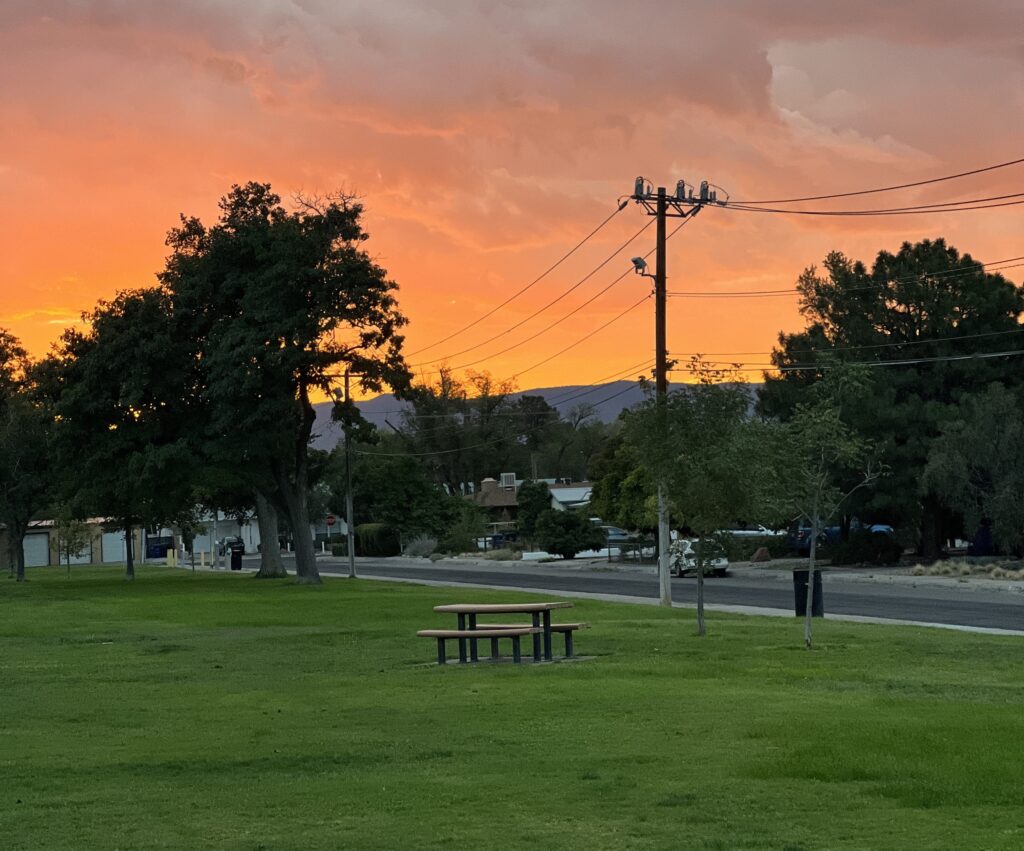
Burton Park, Albuquerque, New Mexico. Reuse area for DP-1308, Southside Water Reclamation Plant Reuse System. Photo by Madison Buechter.
Objective
Improve New Mexico’s Climate Resilience
Over the next 50 years, New Mexico is predicted to experience drier conditions and longer, more severe droughts. This will require new ways to preserve New Mexico’s water supply. Reusing water is how we plan to reduce the pressure on our freshwater resources and increase our water security.
Increase Savings
In many instances, water reuse technologies and strategic uses can reduce energy use when treating and distributing water. Investing locally in water reuse can create savings for communities.
Support Ecosystems
Riverbank ecosystems and habitats need enough water flow to support wildlife, water quality, and overall ecosystem health. Water reuse can potentially reduce stress on water flow, especially in waterways with canals and dams.
Support Economic Growth
When wastewater is safely reused, it can free up fresh water for other beneficial uses such as farming, drinking water, and supporting New Mexico’s economic growth
Water Reuse Regulations
The Water Quality Control Commission adopted the State’s Ground and Surface Water Protection – Supplemental Requirements for Water Reuse (20.6.8 NMAC), focusing on limited reuse of treated produced water, which is a byproduct from oil and gas activities.
For additional information on Produced Water, please visit our Produced Water webpage.
Water Reuse Sources
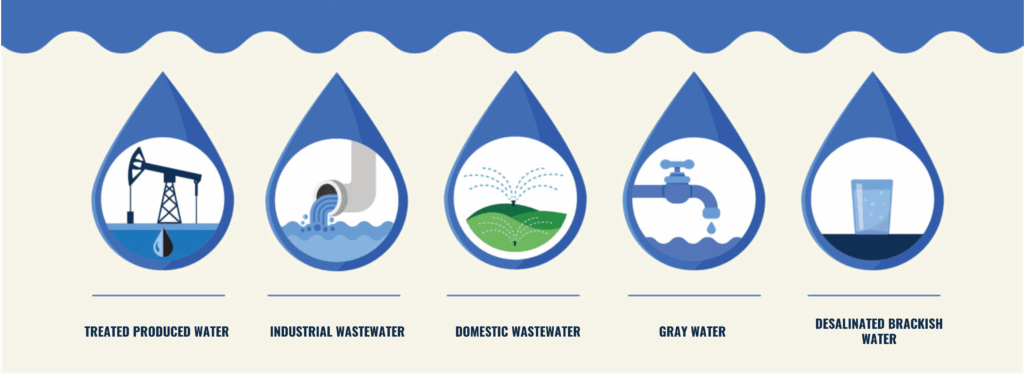
Treated Produced Water
Produced water comes out of a well during crude oil and gas production. It then undergoes various treatment processes to be used within and outside of oil and gas production.
For additional information on Produced Water, please visit our Produced Water webpage.
Brackish Water Desalination
Brackish water is native groundwater that contains more salt than freshwater. Brackish water can be evaporated and condensed to be turned into freshwater.
Domestic Wastewater
Domestic wastewater is treated wastewater from towns, municipalities, and subdivisions. Domestic wastewater can be treated through nitrification, denitrification, filtration, and disinfection to be used for various applications.
Gray Water
Gray water can be reused in various applications, depending on the level of treatment.
Water reuse rules aim to establish guidance for water reuse, permitting processes, and data-sharing that will be used to develop and implement the newest technologies and support water resources needs for New Mexico.
Water Reuse Applications
Oil and Gas
Agriculture
Recreation
Indirect Potable Reuse
Direct Potable Reuse
Industrial Reuse
Future Rulemaking
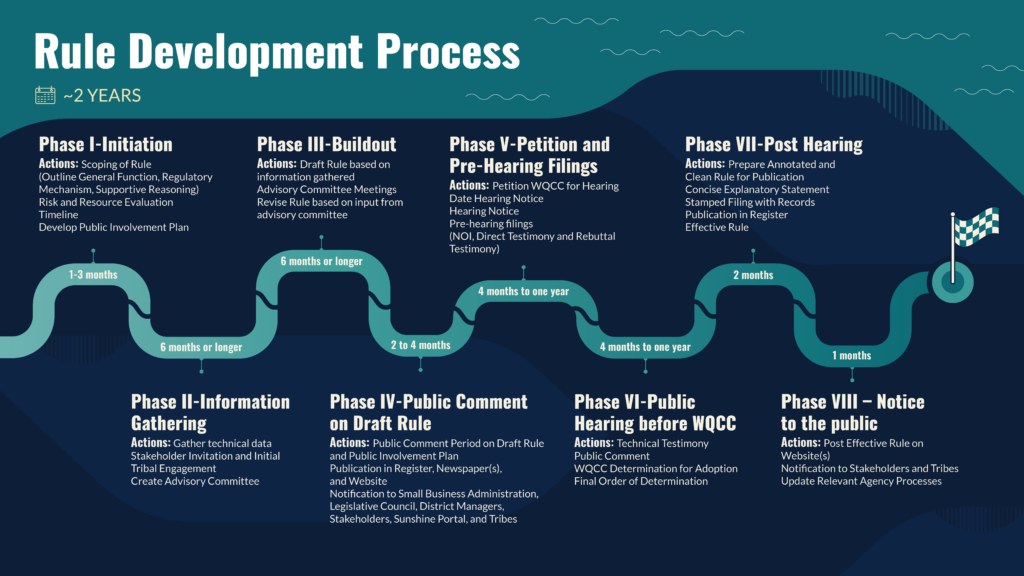
NMED will evaluate and share information on new rules about water reuse. Additional information on rulings and timelines will be posted here when they become available. A generalized Rule Development Process is shown below.
For more information on the rulemaking process, please visit the WQCC webpage.