
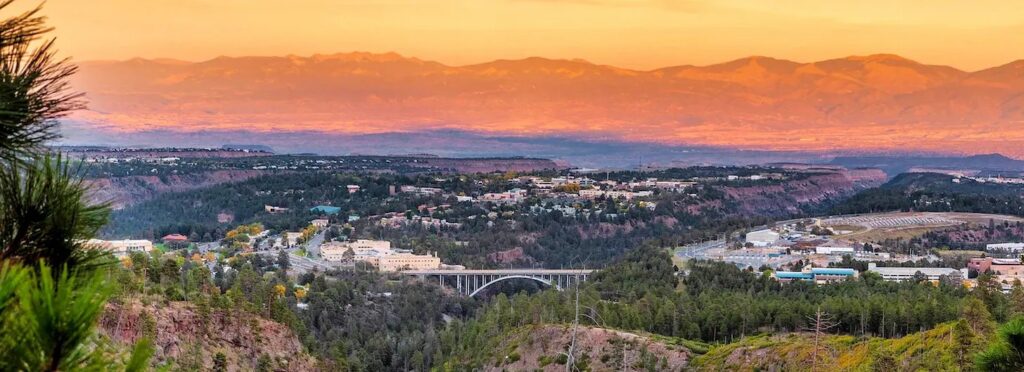
NMED DOEOB operations at Los Alamos National Laboratories (LANL) are intended to support non-regulatory activities of the State of New Mexico in working with the DOE to evaluate the adequacy of DOE activities related to environmental monitoring; establish a comprehensive, coordinated environmental oversight and monitoring program; facilitate a better understanding by local and Tribal governments and the general public on the environmental impacts, if any, associated with LANL operations; and to support periodic State monitoring of discharges, emissions, or biological parameters as necessary to verify the effectiveness of the DOE programs at LANL.
The DOEOB Los Alamos Oversight Section (LOS) provides technical support to the U.S. DOE, DOE contractors, the NMED, state and federal entities, tribes, and public interest and oversight groups. Technical support includes the technical review and comment of analytical data, work plans and sampling and analysis plans (SAPs), and Environmental Impact Statements (EISs), and other technical documents and reports.
The DOE‐OB LOS is an integral and founding member of the Software Control Board (SCB), a collaborative group that manages the database EIM/Intellus New Mexico, which stores all geospatial, environmental field and analytical data on and around LANL property for internal and public use. Other members of SCB include the two primary LANL contractors, Triad and N3B. All three organizations collaborate to troubleshoot database issues, plan database improvements, approve all sampling locations, analytical parameters, and methods. Besides the functionality of EIM/Intellus for DOEOB data reporting purposes, the presence of DOEOB as a stakeholder and decision maker on SCB confirms credibility to the public of all environmental monitoring data produced by Triad and N3B.
The majority of our data from Los Alamos is located within the Intellus database, please visit LANL’s Electronic Public Reading Room reading room for all LANL reports.
Air Monitoring
What This Program Monitors
The Department of Energy Oversight Bureau (DOEOB) conducts independent air monitoring around Los Alamos National Laboratory (LANL) to measure radioactive particulate and tritium in outdoor air. This monitoring helps determine whether LANL historic and current operations impact air quality and public health.
Why This Matters
Clean air is essential to protect public health and the environment. Air monitoring helps identify potential releases from current or historical laboratory activities and provides transparent information to New Mexicans about environmental conditions near LANL.
How Monitoring Is Conducted
DOEOB operates continuously running, low-volume air samplers positioned around the LANL perimeter. These samplers collect airborne particles on filters and moisture in silica gel cartridges.
- Samples are collected every two weeks
- Samples are analyzed by independent laboratories
- Results are reviewed quarterly
- During emergencies such as wildfires, demolition activities, or unplanned releases, DOEOB deploys mobile air-monitoring equipment to provide rapid response data.
What We Measure
- Gross alpha and gross beta radiation
- Americium, plutonium, and uranium isotopes
- Gamma-emitting radionuclides
- Tritium
The analytes selected are consistent with those used by LANL and reflect contaminants known or suspected to be associated with current or historical activities.
Data Reporting
All data collected is uploaded and publicly available at https://intellusnm.com/
Contact program manager Linsey Hurst at Linsey.Hurst@env.nm.gov for assistance or program-related questions..
Biological Monitoring
What This Program Monitors
The Department of Energy Oversight Bureau (DOEOB) conducts biological monitoring to evaluate whether past or current activities at Los Alamos National Laboratory (LANL) affect plants, animals, and aquatic life. The program examines living organisms that can absorb contaminants from their environment over time.
Why This Matters
Plants and animals can provide early warning signs of environmental contamination. Monitoring biological media helps DOEOB understand how contaminants may move through ecosystems and food webs and whether they pose potential risks to public health or the environment. By monitoring regionally and locally, DOEOB can compare potential environmental impacts from LANL to natural background sources. This information supports long-term environmental protection and transparency for New Mexicans.
How Monitoring Is Conducted
DOEOB collects biological samples at LANL, in areas adjacent to LANL, and at regional locations used for comparison. Sampling occurs periodically as part of surveillance monitoring and confirmatory sampling in conjunction with the LANL ‘Soil, Foodstuffs and Biota’ program. Biological monitoring includes:
- Fish and crayfish tissue sampling in the Rio Grande and nearby reservoirs
- Foodstuff, such as honey, fruits and vegetables, sampling from local and regional growing areas
- Water quality assessments using benthic macroinvertebrate populations in LANL-area streams
- Vegetation collected from areas of concern
- Opportunistic animal salvage, such as roadkill
What We Measure
Biological samples are analyzed for contaminants that may be present due to environmental exposure, including:
Heavy metals
- Radionuclides
- Polychlorinated biphenyls (PCBs)
- PFAS
- Other contaminants of concern (COCs)
Data Reporting
All data collected is uploaded and publicly available at https://intellusnm.com/
Contact program manager Lindsey Gurganus at Lindsey.Bargelt-Gurganus@env.nm.gov for assistance or program related questions.
Direct Penetrating Radiation Monitoring
What This Program Monitors
The Direct Penetrating Radiation Monitoring Program monitors ambient gamma radiation in the environment. Gamma radiation can travel through air and solid materials, which is why it is monitored in open environments. This program focuses on monitoring radiation around Los Alamos County and Los Alamos National Laboratory as well as background stations in Santa Fe County and Espanola.
Why This Matters
This program helps ensure public health, environmental protection, and provides independent verification of radiation levels near DOE facilities, separate from DOE’s own monitoring. Collection of long-term data allows NMED to detect trends, changes, or unusual radiation levels over time. There are no specific regulatory limits for ambient environmental gamma radiation, so comparison to background levels monitored in Santa Fe County and Espanola is used to assess changes in ambient gamma radiation from laboratory activities.
How Monitoring Is Conducted
Monitoring is conducted using Electret Ion Chambers (EICs) placed at fixed locations. These devices measure cumulative gamma radiation over a quarterly monitoring period.
- Instruments are deployed outdoors at established monitoring stations.
- After the monitoring period, devices are collected and analyzed for radiation dose.
Data are:
- Compared to historical background levels
- Reviewed for consistency and anomalies
- Compiled into periodic reports (quarterly or annual)
What We Measure
Total gamma radiation dose over time expressed as a dose rate (commonly in millirem or millisievert equivalents)
Environmental radiation, including natural sources such as:
- Cosmic radiation
- Naturally occurring radioactive materials in soil and rock
Data Reporting
All data collected is uploaded and publicly available at https://intellusnm.com/
Contact program manager Adam Killebrew at adam.killebrew@env.nm.gov for assistance or program related questions.Put content here
Groundwater Monitoring
What This Program Monitors
The Groundwater Monitoring Program at NMED’s Department of Energy Oversight Bureau conducts independent groundwater sampling to determine the health of Los Alamos National Lab (LANL) adjacent groundwaters and determine nature and extent of groundwater contamination resulting from LANL activities.
Why This Matters
Groundwater below the National Lab and its influence flows down gradient towards the Rio Grande or San Idelfonso Pueblo Land.
Groundwater is the only water source for city drinking water in the immediate surrounding towns of Los Alamos and White Rock, additionally the Pueblo of San Idelfonso also heavily relies on groundwater for its domestic needs. LANL uses groundwater for research. The Rio Grande gets direct flow from groundwater through above surface and below surface springs.
How Monitoring Is Conducted
Groundwater is monitored via installed “monitoring wells” or observation wells. Other types of wells such as production, supply, injection, and extraction wells may also be used if they are in good working order and can retrieve a sample. Wells allow for sampling at the depths in which their “Screen” is installed. Water is extracted directed from under ground and can be used to measure water parameters and analyze for contaminants.
What We Measure
Firstly, water parameters are measured within the well after purging to confirm water is being collected from the groundwater not what is trapped within the well casing. Parameters can indicate water source and contamination. Water Parameters measured:
pH, specific conductivity, oxygen reduction potential, temperature, total dissolved solids
If water is sampled for contaminants or chemistry analysis. These are some of the common analyses:
Metals, anions, alkalinity, nitrogen species, radionuclides, volatile and Semi-volatile organics, high explosive substances, PFAS, pharmaceuticals, and other contaminants of concern (COC)
Data Reporting
All data collected is uploaded and publicly available at https://intellusnm.com/
Contact program manager: Kevin Boyko at kevin.boyko@env.nm.gov for assistance or program related questions.
Atmospheric Deposition Monitoring
What This Program Monitors
The NMED DOE Oversight Bureau conducts independent environmental monitoring around U.S. Department of Energy (DOE) facilities (Los Alamos National Laboratory) — including atmospheric deposition and precipitation chemistry — to assess potential impacts of DOE operations on the environment and public health.
Specifically, the program monitors:
Atmospheric deposition — the deposition of chemicals from the air to the surface via rain, snow, dust, and other processes. These measurements help determine how pollutants such as PCBs (Polychlorinated biphenyls) from the air move to land, water, and ecosystems.
Why This Matters
Pollutants in the air can deposit onto soils and water bodies via precipitation, potentially affecting water quality and ecosystem health.
This program helps identify whether PCBs are being transported from DOE facilities or other sources into the environment.
Our data provides independent, transparent information to the public and regulators about environmental conditions around LANL sites.
Understanding deposition trends supports science-based decisions regarding emissions regulations, remediation needs, and long-term environmental protection.
How Monitoring Is Conducted
Precipitation (rain, snow) and dust is collected at regular intervals (e.g., quarterly) using standardized equipment (LI-COR wet and dry deposition collection stations) in various locations around LNAL and areas outside of the LANL boundary for background measurements.
- Laboratory Analysis – Collected precipitation samples are sent to analytical laboratories where they are measured for chemical constituents using clean-handling and quality-assured methods.
- Regular Reporting – Data are compiled, analyzed, and made available through systems like Intellus New Mexico (link below) or annual environmental reports, offering public access to monitoring results.
What We Measure
- Atmospheric deposition and precipitation monitoring measure PCBs in precipitation and dry deposition:
- Wet Deposition (via Precipitation of snow and rain)
- Dry Deposition (dust) While not always part of precipitation sampling results, dry deposition is collected on a yearly interval.
Data Reporting
All data collected is uploaded and publicly available at https://intellusnm.com/
Contact program manager Adam Killebrew at adam.killebrew@env.nm.gov for assistance or program-related questions.
Sediment Monitoring
What This Program Monitors
The Department of Energy Oversight Bureau (DOEOB) collects post monsoon sediment samples from canyon-bottoms in the seven major watersheds across Los Alamos National Laboratory (LANL) and Los Alamos County in the fall of each year. This monitoring helps determine whether contaminants of concern from LANL historic and current operations are migrating through the watershed because of the summer monsoons.
Why This Matters
Monitoring contaminant migration in sediments is essential to protect public health and the environment and ensure we are maintaining heathy watersheds. Monitoring sediment each fall, helps identify potential releases from current or historical laboratory activities and provides transparent information to New Mexicans about environmental conditions near LANL.
How Monitoring Is Conducted
Samples are collected from both active channels and overbank‐flow sediment deposition locations on flood plains.
What We Measure
- Metals
- Polychlorinated biphenyls (PCBs)
- Radionuclides
- Perfluoroalkyl and Polyfluoroalkyl Substances (PFAS)
- Organics
- Other contaminants of concern (COCs)
The analytes selected are consistent with those used by LANL and reflect contaminants known or suspected to be associated with current or historical activities.
Data Reporting
All data collected is uploaded and publicly available at https://intellusnm.com/
Contact program manager Linsey Hurst at Linsey.Hurst@env.nm.gov for assistance or program-related questions.
NPDES General Monitoring Program
What This Program Monitors
The Department of Energy Oversight Bureau (DOEOB) conducts oversight monitoring of Los Alamos National Laboratory (LANL) National Pollution Discharge Elimination System (NPDES) permitted sites. The NPDES program was created in 1972 by the Clean Water act to regulate point source pollution discharges into U.S. waters. This monitoring helps determine whether LANL operations affect water quality and public health.
Why This Matters
LANL is required to provide regular reports to the EPA and NMED about the water quality of any water that is discharged from a permitted outfall. They are also required to provide reports on spills of any liquid, including water, gasoline, or other fluids, that are accidentally released on LANL property. DOEOB collects environmental samples at both permitted outfalls and spills to confirm the data that LANL reports and provide transparency to the public.
How Monitoring Is Conducted
Permitted Outfalls:
- Samples are collected cooperatively with LANL once per year at each permitted outfall site
- Additional samples may be collected throughout the year if needed
- Samples are processed by an external analytical laboratory
- Data is reviewed annual and compared to LANL’s reports to confirm results
Spills:
- Due to the unexpected nature of spills, sampling is conducted on an as needed basis
- LANL is required to report any spills to NMED
- Once DOE OB receives a report of a spill, the contents of the spill are analyzed to determine if sampling is needed
- If sampling is needed, DOEOB staff visit the site with LANL personnel to collect cooperative samples
- Data is reviewed and compared to LANL results for confirmation
What We Measure
Metals
- Polychlorinated biphenyls (PCBs)
- Radionuclides
- PFAS
- Other contaminants of concern (COCs)
Data Reporting
All data collected is uploaded and publicly available at https://intellusnm.com/
Contact program manager Steve Yaniciak at steve.yanicak@env.nm.gov for assistance or program-related questions.
NPDES Individual Permit Monitoring Program
What This Program Monitors
The Department of Energy Oversight Bureau (DOEOB) monitors stormwater runoff and associated contaminant transport from Los Alamos National Laboratory (LANL) legacy sources, including Solid Waste Management Units (SWMUs) and Areas of Concern (AOCs). Monitoring is conducted to evaluate compliance with the National Pollutant Discharge Elimination System (NPDES) Individual Permit and to assess potential impacts to downstream surface waters.
Why This Matters
Stormwater monitoring and confirmatory sampling aims to quantify the pollution load of contaminants (particularly PCBs, radionuclides and metals) coming from LANL legacy sources in storm water and help to provide a more detailed investigation to measure impacts to the watershed in addition to assessing Contaminants Of Concern (COCs) that migrate and leave the facility from Site Monitoring Areas, or SMAs, as described in the NPDES Individual Permit. Additional contaminants may also be examined to better define the impact of legacy sources on contaminant concentrations in LANL storm water, and potentially the benefits of LANL-implemented stormwater controls .
How Monitoring Is Conducted
The DOEOB conducts ongoing sampling of stormwater discharges associated with SWMUs and AOCs to assess compliance with the LANL NPDES Individual Permit. Automated pump samplers and single-stage samplers are installed at designated locations to collect stormwater samples during precipitation events.
What We Measure
- Stormwater samples are analyzed for the following parameters:
- Metals
- Polychlorinated biphenyls (PCBs)
- Per- and Polyfluoroalkyl Substances (PFAS)
- Radionuclides
- Suspended sediment concentration
- High explosives
- Volatile organic compounds
Data Reporting
All data collected is uploaded and publicly available at https://intellusnm.com/
Contact program manager Jonathan Celmer at jonathan.celmer@env.nm.gov for assistance or program related questions.
Storm Water Monitoring
What This Program Monitors
The Department of Energy Oversight Bureau (DOEOB) maintains two stormwater monitoring programs: Watershed Scale Monitoring and NPDES Individual Permit Monitoring to track pollutants from legacy activities and monitor the effectiveness of LANL-implemented stormwater controls aimed at reducing runoff and sediment transport.
Why This Matters
It is essential to monitor stormwater to better understand the impact of past LANL activities and ensure no contaminants are reaching local water bodies such as the Rio Grande and impacting the environment and human health.
How Monitoring Is Conducted
The DOEOB conducts ongoing sampling of stormwater discharges from solid waste management units (SWMUs) and areas of concern (AOCs) for compliance with the LANL Individual Permit (IP) for Stormwater. The DOEOB also monitors all major watersheds across the Pajarito Plateau at the downstream boundary of current or historical LANL property. Automated pump samplers or single stage samplers are installed to collect the water samples.
What We Measure
- Water samples are analyzed for:
- Metals
- Polychlorinated biphenyls (PCBs)
- Per- and Polyfluoroalkyl Substances (PFAS)
- Radionuclides
- Suspended sediment concentration
- High explosives
- Volatile organic compounds
Data Reporting
All data collected is uploaded and publicly available at https://intellusnm.com/
Contact program manager Jonathan Celmer at jonathan.celmer@env.nm.gov for assistance or program related questions.
Outreach
What This Program Does
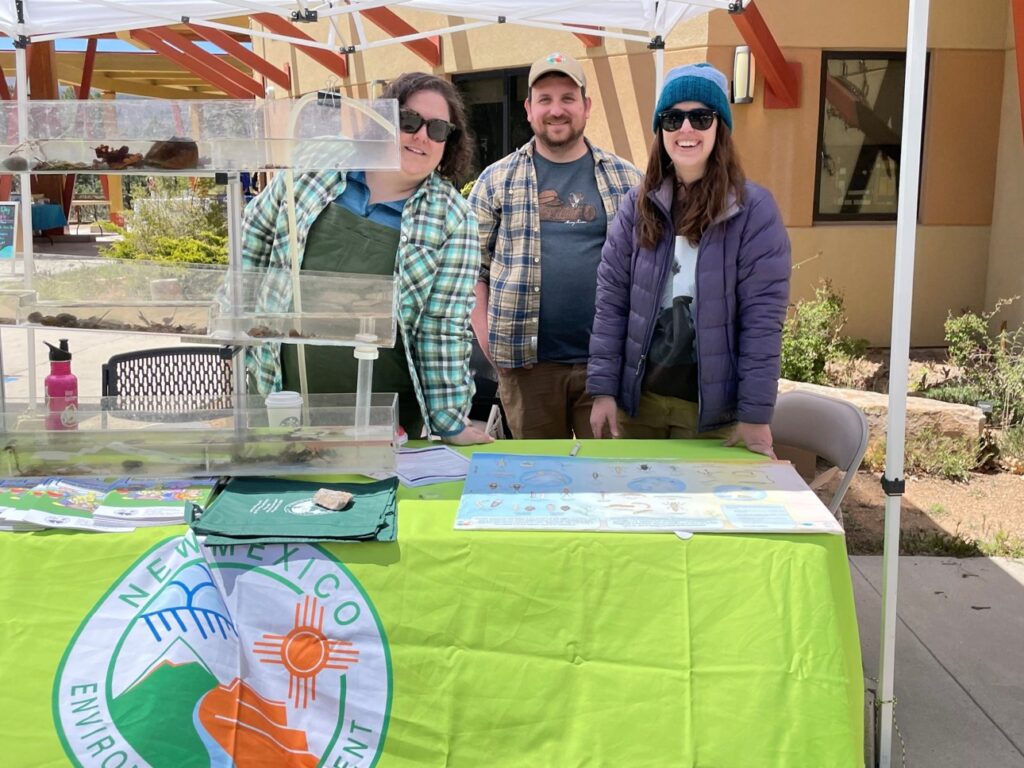
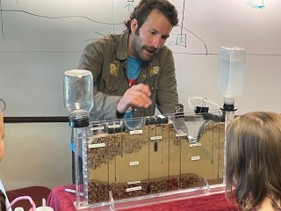
DOEOB Los Alamos participates in many public outreach opportunities such as events, festivals, and school programs.
Why This Matters
This program aims to educate the public on the mission of NMED and DOEB, and to facilitate educational opportunities.
How This Program Is Conducted
DOEOB Los Alamos has many interactive displays and lessons to teach about their work and the environment involving lessons on groundwater, stormwater and biota.
Contact program manager: Lindsey.Bargelt-Gurganus@env.nm.gov if you would like NMED to visit your STEM event or classroom.